
IOCG Discovery at San Javier
In July 2020 field crews working for Canuc Resources Corp. (TSX-V: CDA) identified massive magnetite veins carrying high to bonanza grades of silver on the company’s newly acquired ‘El Tule’ claim. The ‘El Tule’ claim had never been explored for metals because in recent history, and until October 2019, the claim had been owned by a private Mexican company which was focused on mining Anthracite (hard coal).
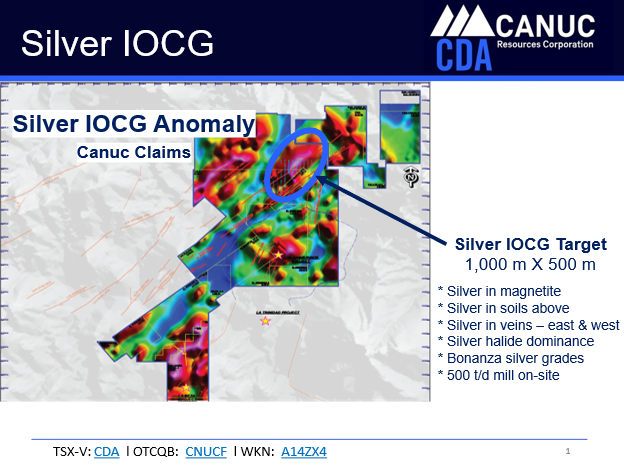
Almost immediately upon beginning field work, Canuc’s geological field crews identified an extensive breccia zone hosting silver mineralization in magnetite which was open to the west. With mapping it became evident that the breccia zone had considerable size extent and covered a strike length in excess of 800 meters over widths exceeding 80 meters.
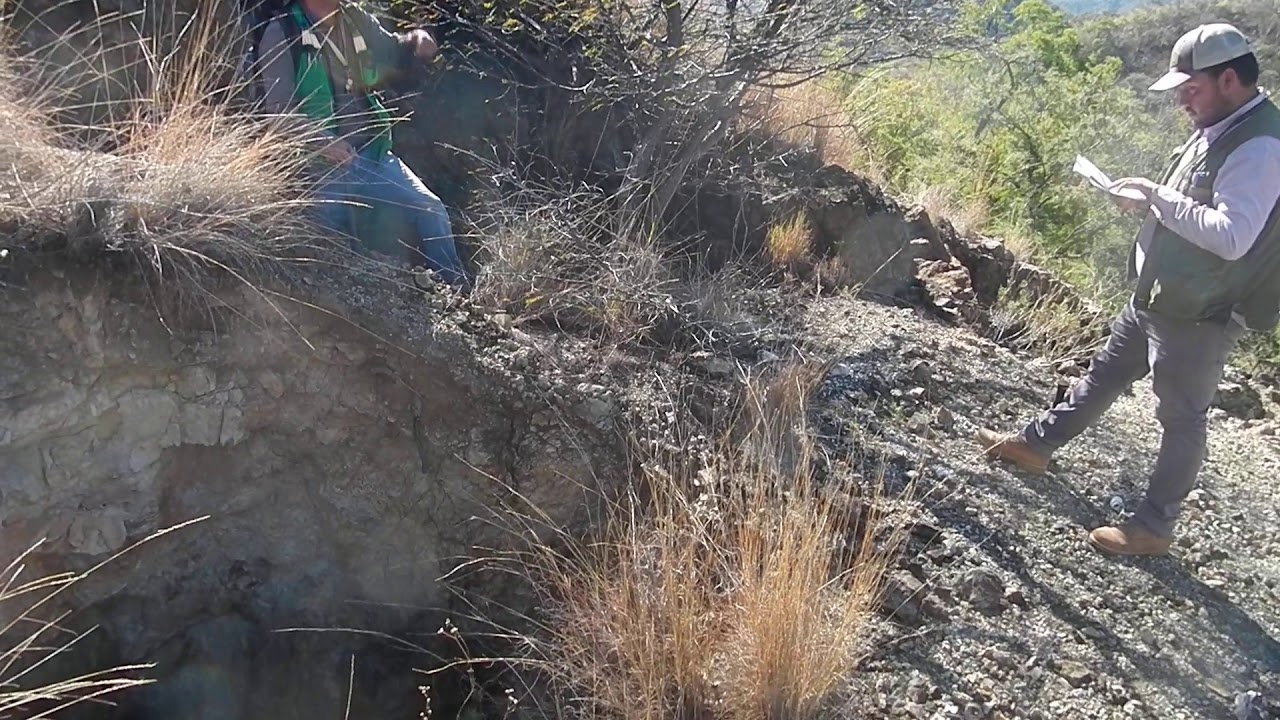
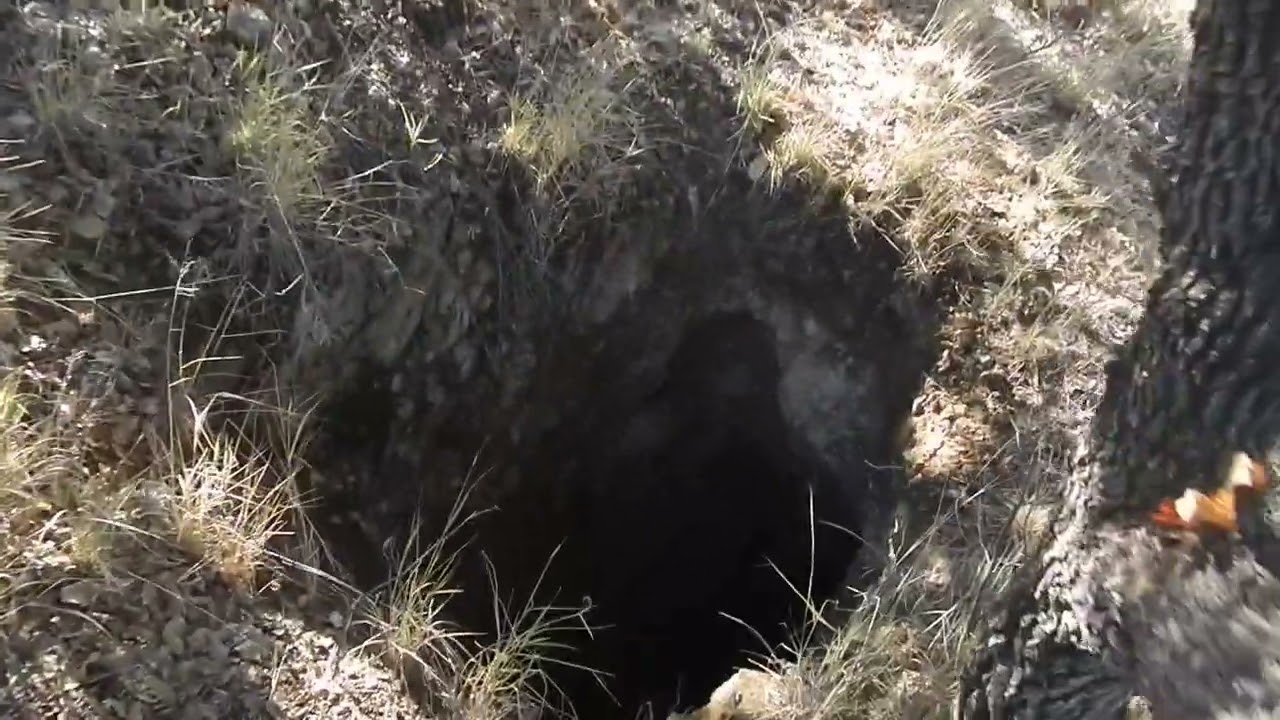
Old artisanal silver mine workings (circ. 1800’s) were discovered at multiple locations along the middle of the breccia body. Samples were taken from within the mine workings and very high to bonanza grades of silver were found with magnetite. Samples were also taken along the breccia body in areas where no mining had occurred and, interestingly, silver was reported from all samples taken within the larger breccia body.
Canuc Resources Corp. (TSX-V: CDA) press release September 22nd, 2020
In late August of 2020, shortly after company geological field crews began reporting on the breccia discovery, management uncovered a report that had been written in 2006 by Dr. Murray W. Hitzman who, at the time of writing, had been Head of the Department of Geology and Geological Engineering at the Colorado School of Mines. In 2006 Dr. Hitzman had been visiting the property bordering Canuc’s claims to the south and had written a report summarizing his findings.
Dr. Hitzman is recognized internationally as one of the world’s foremost authorities on IOCG deposit types. In 2006 Dr. Hitzman had been visiting claims to the south of Canuc’s claims on ground which at that time was held by a public company called Constellation Copper Corp. (these claims are today held by Barksdale Resources Corp. (TSX-V: BRO).
_______________________________________________
Observations from a Visit to San Javier Project, Sonora, Mexico (October 2006)
Dr. Murray W. Hitzman San Javier Site Visit October 2006
By: Dr. Murray W. Hitzman
Head of the Department of Geology at the Colorado School of Mines, October 2006
_______________________________________________
* Relevant Highlights on Pages: 5,7,8 & 12
Dr. Hitzman’s report was striking because on pages 5, 7 & 8 he stated that the absence of magnetite on the Constellation Copper claims (today held by Barksdale Resources Corp. and located south of Canuc’s claims) suggested to him that their claim holdings could be hosting the displaced cap of an IOCG system.
On page 12 of his report Dr. Hitzman states that “A deeper core zone with potential mineralization (magnetite-bearing) should be present somewhere in the area and based on available magnetics the zone could be to the SW, NE or N”. Canuc found this magnetite-bearing mineralization NE of the location where this assessment had been made, and in the location where Dr. Hitzman had predicted it would be. The mineralization referenced turned out to be very high to bonanza grades of silver, and this silver was found in old silver mine workings along the breccia zone which was located on Canuc’s newly acquired ‘El Tule’ claim.
The report goes on to state on page 12 that “... it appears to me that there is potential for a very high-grade, probably structurally controlled deposit somewhere in the district.” Dr. Hitzman’s thesis was that this would be the core zone of an IOCG deposit type. An IOCG deposit type with silver-dominant mineralization is consistent with the prevalence of silver in the mantle throughout Mexico.
Canuc geologists believe today that the large magnetic anomaly found on Canuc’s ‘El Tule’ claim is created by a magnetite intrusion which came from depth bearing high-bonanza grades of silver within the magnetite. This represents the large, high-grade and structurally controlled deposit referenced by Dr. Hitzman. Canuc geologists believe that this is one of the world’s unique silver-dominant IOCG deposit types and that it is located in the north center of the company’s El Tule claim at San Javier.
In 2020 Canuc geologists found significant magnetite mineralization and high to bonanza grades of silver with gold and copper. This tracked Dr. Hitzman’s thesis of “... a deeper core zone with magnetite bearing mineralization” and was in fact located NE of the area from which he had been surveying for his report. The breccia body hosting these metals was found less than 2 km N-NE of where Dr. Hitzman had suggested that the discovery of magnetite could represent the core or lower levels of an IOCG system, and it was found in the direction and location that had been suggested by Dr. Hitzman in his report.
Company geologists now believe that the lower levels of a silver-dominant IOCG deposit system are located on the company’s claims. The high-grade silver in magnetite representing this system are found proximal to the large magnetic response identified on the company’s ‘El Tule’ claim.
IOCG Iron Oxide Copper Gold ore deposits (Wikipedia)
Iron Oxide Copper Gold ore deposits (IOCG) are important and highly valuable concentrations of copper, gold and uranium (or silver) ores hosted within iron oxide dominant gangue assemblages which share a common genetic origin. These ore bodies range in size from around 10 million tonnes of contained ore to 4 billion tonnes or more of contained ore.
The tremendous size, relatively simple metallurgy and relatively high grade of IOCG deposits can produce extremely profitable mines.
____________________
Gallery


Videos
San Javier Links
IOCG Discovery at San Javier Oct.2006 – Sep.2020
Silver-dominant IOCG Jan.2021
Silver-dominant IOCG Apr.2021
Building a Mine at San Javier Sep.1990 - Apr.2022